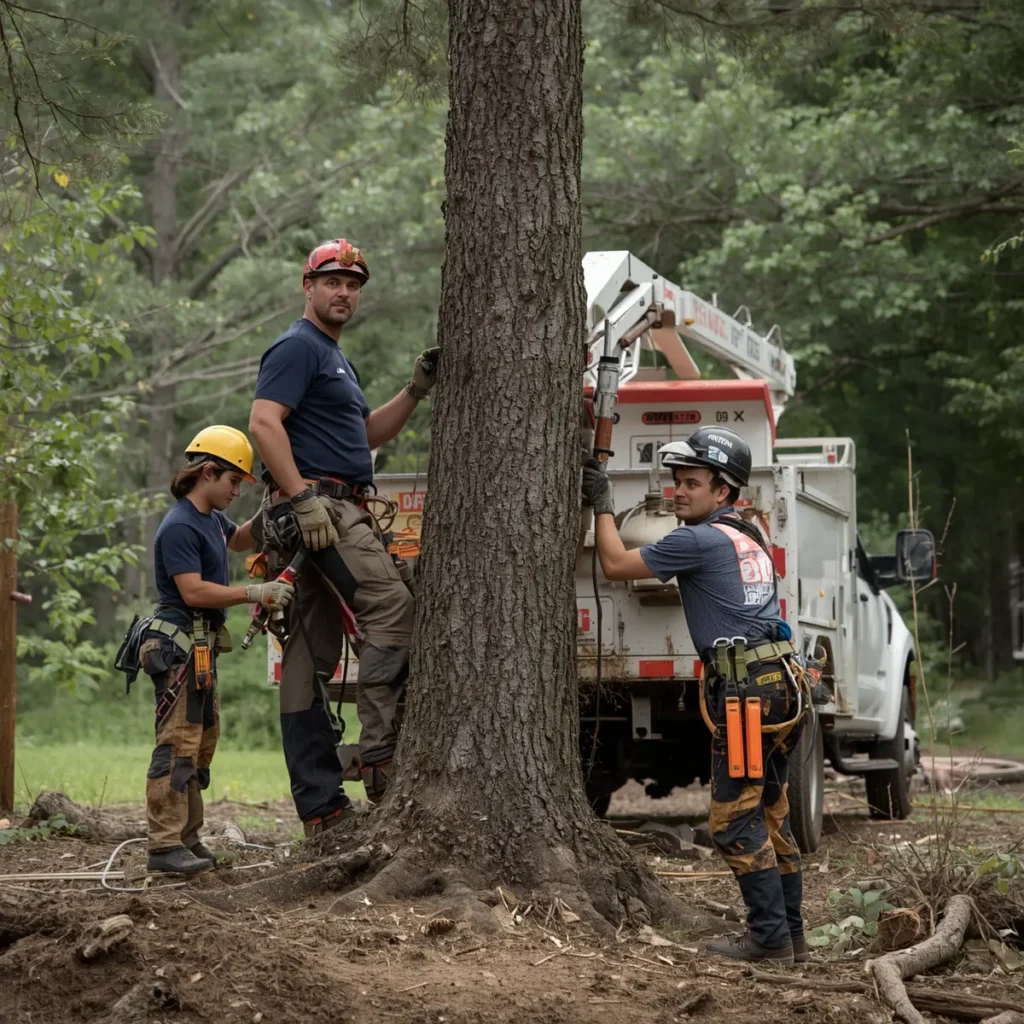
Central New York weather is notoriously unpredictable. From heavy winter ice storms weighing down fragile limbs to sudden, violent summer thunderstorms bringing high winds, property owners in Madison County face constant environmental threats. When a massive tree or heavy limb snaps, blocking your driveway, crashing through your roof, or tangling with nearby power lines, you cannot afford to wait. You need professional assistance, and you need it immediately.
At Karst Tree Services, located on West Elm Street in Oneida, NY, we understand that a tree emergency is a high-stress situation that threatens your safety, property value, and peace of mind. We specialize in rapid-response emergency tree removal in Oneida, NY, bringing decades of local experience, heavy-duty rigging equipment, and highly trained professionals directly to your doorstep.
Whether you are dealing with a structurally compromised oak or a completely uprooted maple, our team is standing by to stabilize the situation and safely restore order to your property.
What Constitutes a Tree Emergency?
Not every sick or leaning tree requires an immediate midnight dispatch, but many situations demand urgent intervention. Recognizing the difference can save you thousands of dollars in property damage and prevent serious physical injury. Here are the most common scenarios where you should call for emergency tree removal in Oneida, NY:
- Trees Restings on Structures: If a tree or large branch has fallen onto your home, garage, shed, or vehicle, it is a structural emergency. The weight of the tree can cause ongoing structural failure or compromise the safety of anyone inside.
- Blocked Access Paths: Fallen trees blocking main driveways, private roadways, or entry doors can trap you inside your home or prevent emergency vehicles (ambulances, fire trucks) from reaching you.
- Uprooted or Severely Leaning Trees: If you notice fresh soil cracking, lifting ground around the root ball, or a tree that suddenly took on a severe tilt after a storm, the root system has failed. This tree can crash down at any moment.
- Storm-Splintered Trunks: Large cracks, split trunks, or hanging branches (often called “widowmakers”) mean the structural integrity of the tree is gone. Wind shifts can cause these pieces to drop without warning.
- Trees Overhanging Utility Lines: While you should never approach a tree touching power lines yourself, a tree dangerously sagging over or leaning toward active lines requires immediate professional assessment and utility coordination.
Why DIY Emergency Tree Removal is a Dangerous Risk
When a tree falls on your property, the temptation to grab a chainsaw and tackle the mess yourself can be strong. However, emergency tree removal is vastly different from standard pruning or cutting firewood.
- Unpredictable Tension and Compression: When a tree is fallen or caught on another object, its wood is under immense structural tension. A single wrong cut can cause the trunk to snap back, kick out, or roll violently, leading to catastrophic injury.
- Hidden Electrical Hazards: Storms often pull down power lines that can become hidden beneath fallen foliage. Touching a tree energized by a downed line is instantly fatal.
- Advanced Equipment Requirements: Safely removing a massive hazardous tree frequently requires specialized rigging systems, cranes, high-capacity wood chippers, and aerial lifts.
- Liability Concerns: If a DIY attempt goes wrong and the tree falls further, damaging your neighbor’s home or city property, you could face immense financial liability. Hiring a fully insured, licensed professional like Karst Tree Services eliminates that risk.
Our Safe, Step-by-Step Emergency Removal Process
When you contact Karst Tree Services for an urgent situation, we deploy a systematic, safety-first operational plan designed to secure your property efficiently:
1. Rapid Site Assessment and Hazard Identification
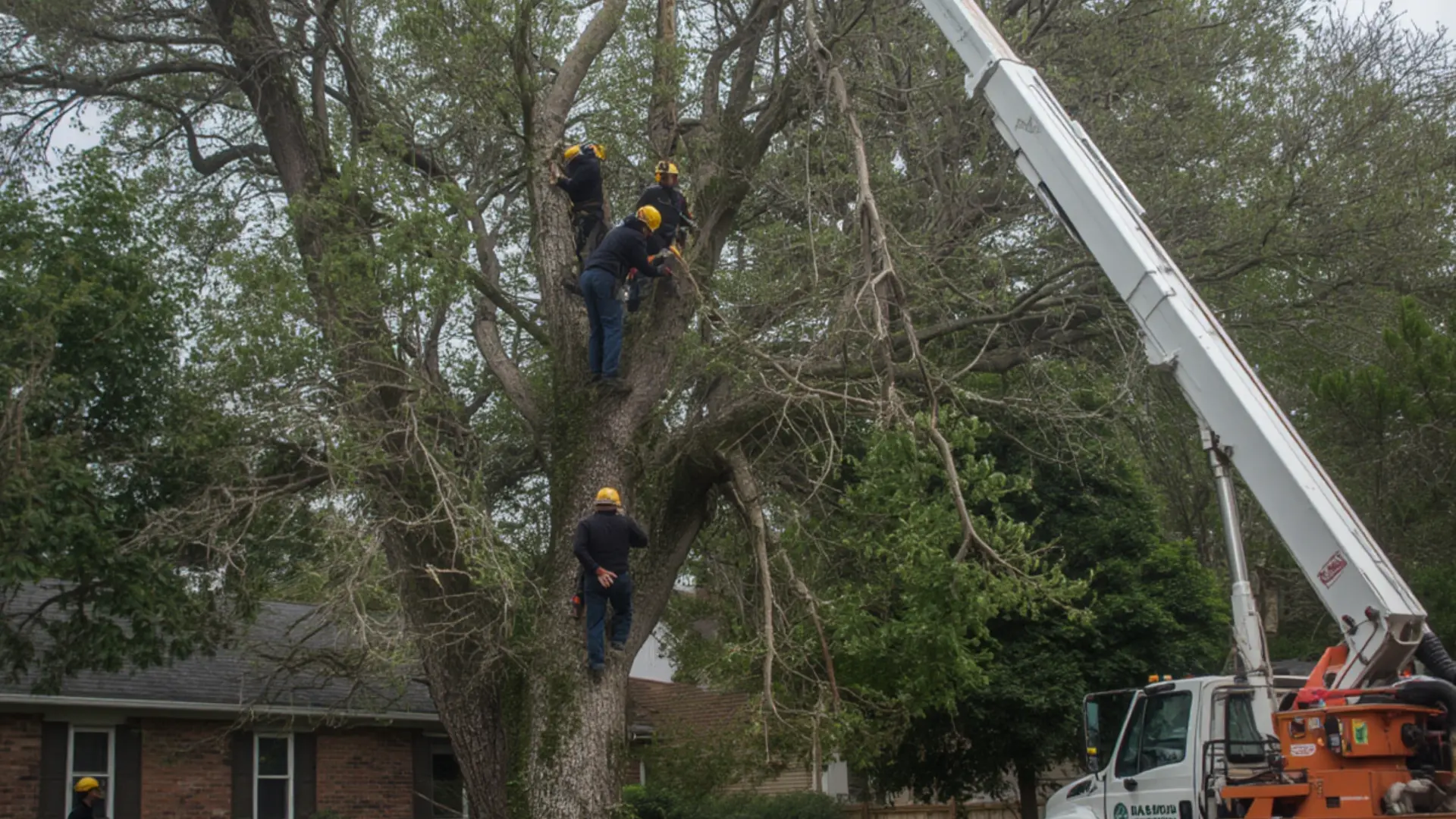
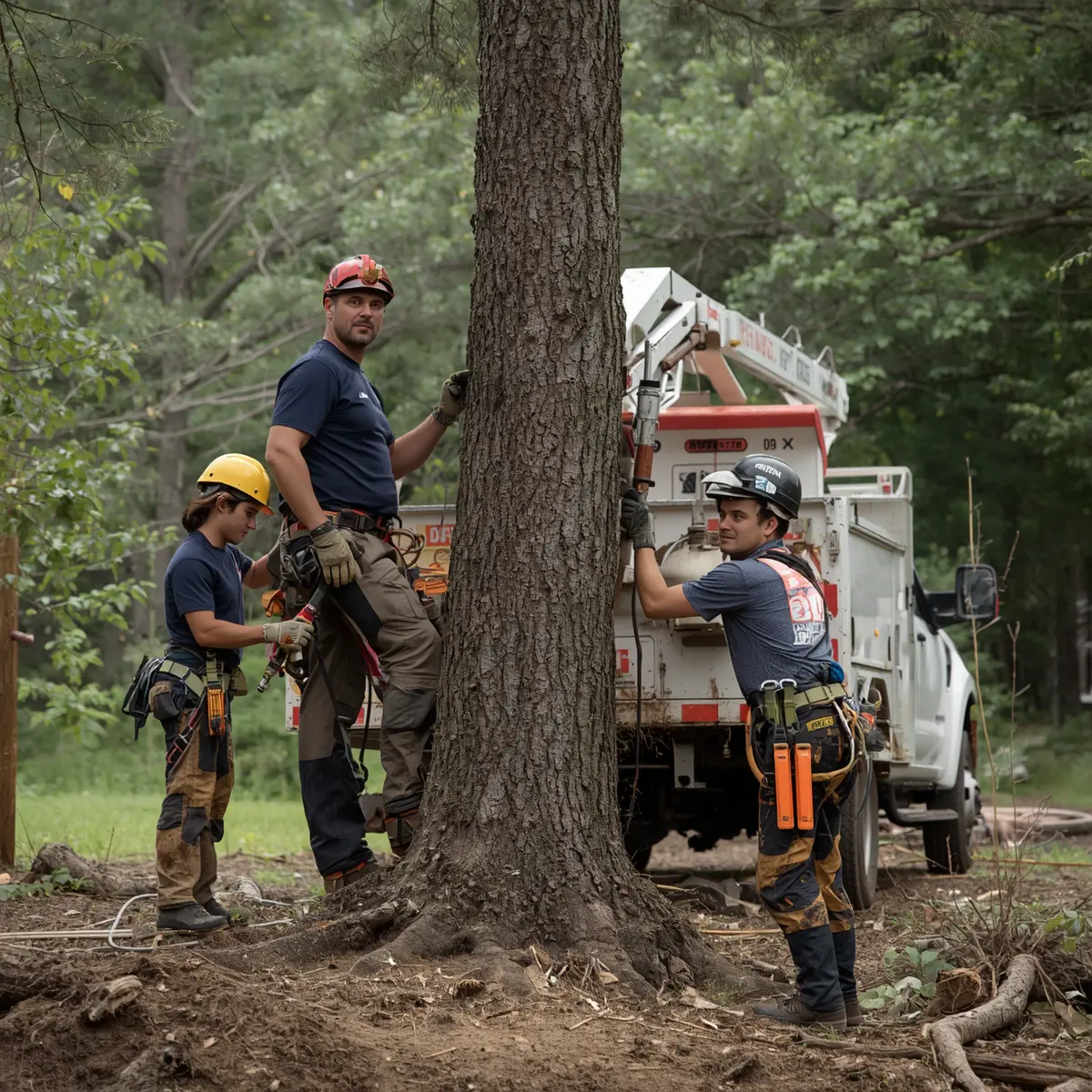
Upon arriving at your property from our base on West Elm Street, our first priority is finding hidden dangers. We evaluate the stability of the tree, check for nearby utility lines, assess structural damage to buildings, and map out a safe work zone perimeter.
2. Formulating a Rigging and Cutting Plan
No two emergency removals are identical. Our team creates a precise extraction plan. If a tree is resting heavily on a roof, we use specialized rigging, cranes, or block-and-tackle systems to lift the weight straight up off the structure, preventing further crushing damage to your home.
3. Careful, Section-by-Section Takedown
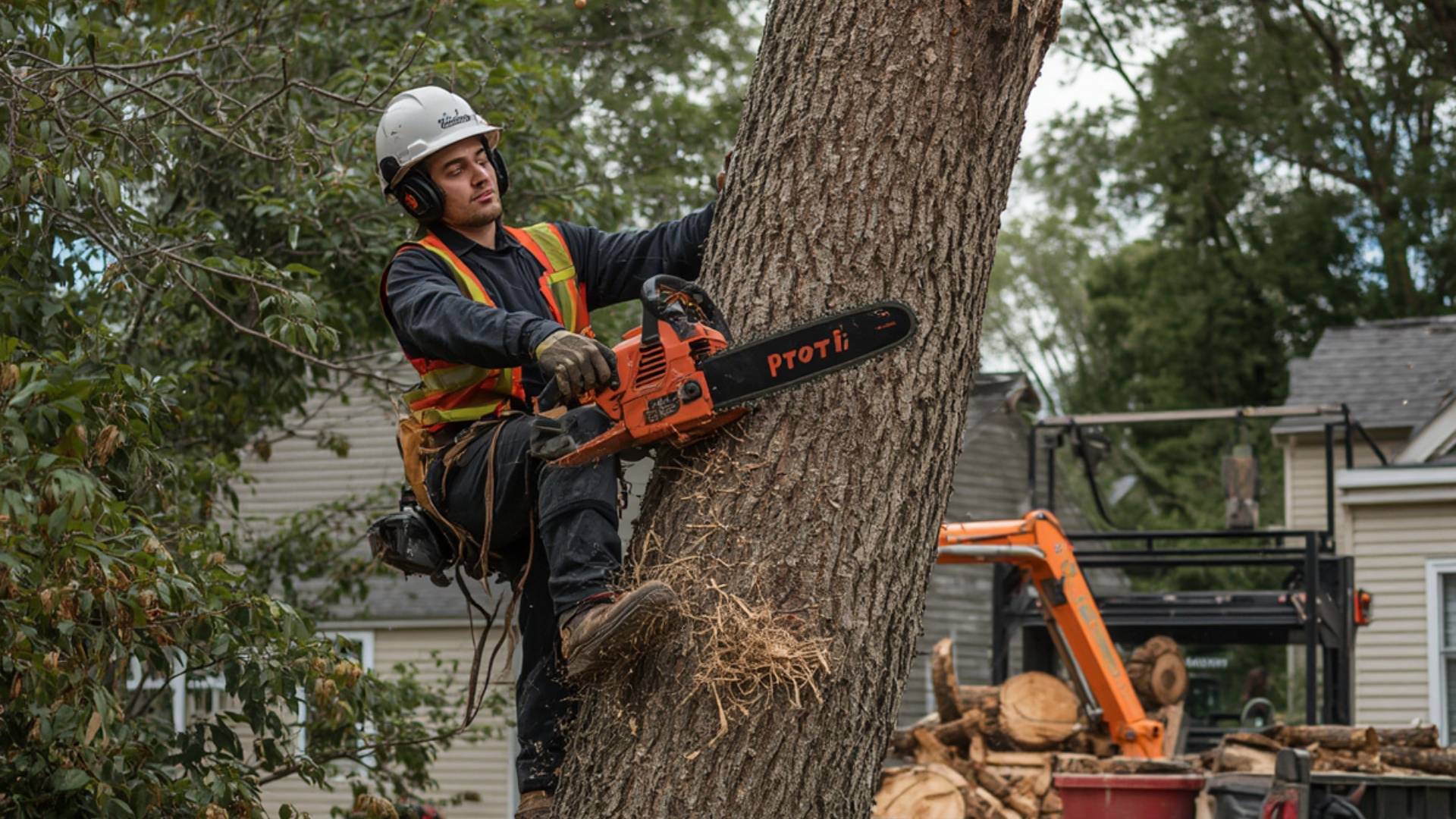
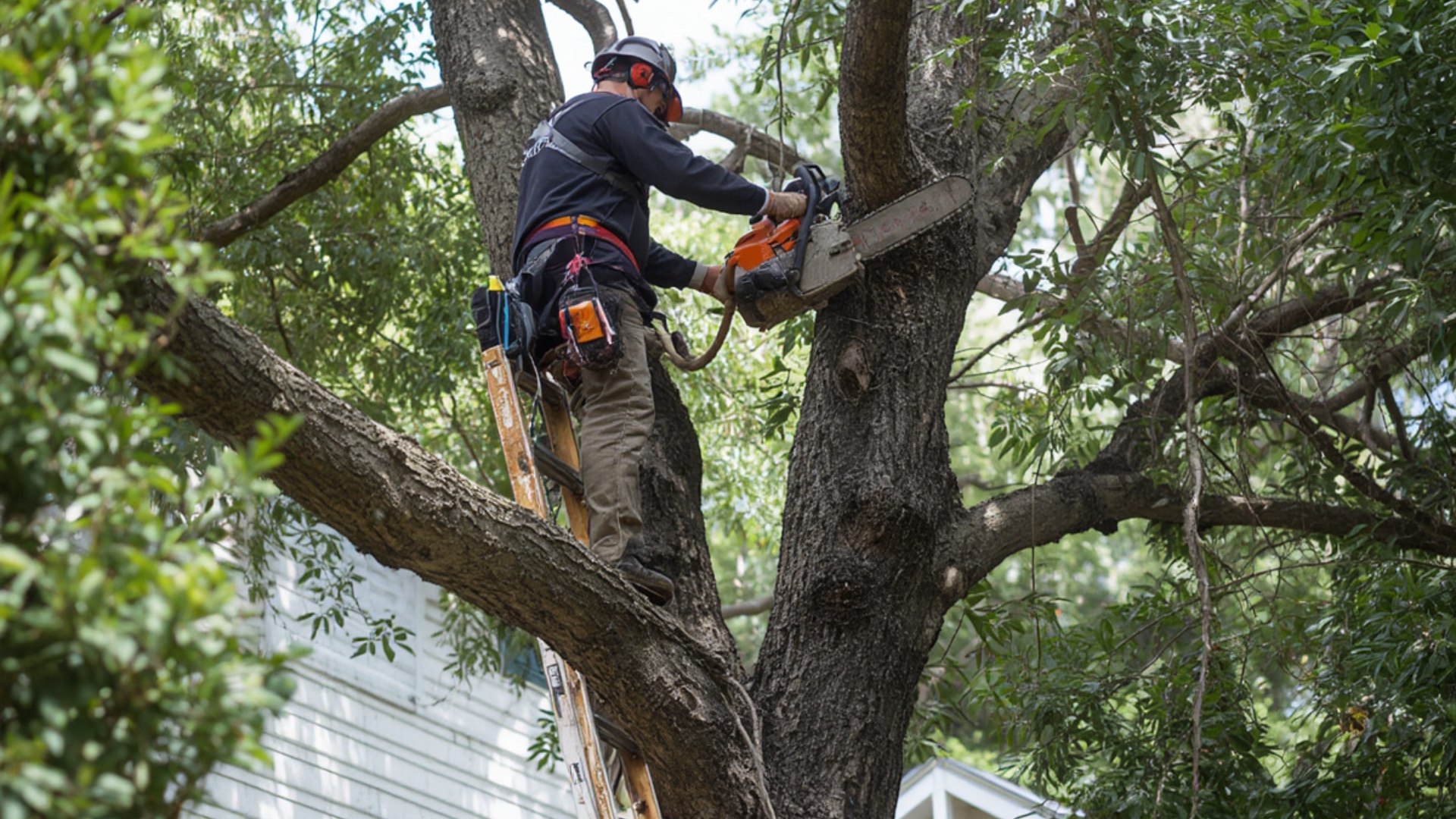
Using precision cutting techniques, our tree surgeons piece out the hazardous tree bit by bit. We systematically drop limbs into designated safe zones, ensuring no further impact occurs to your lawns, landscaping, or remaining structures.
4. Thorough Debris Clearing and Hauling
Once the immediate danger is mitigated, we don’t just leave a massive mess on your lawn. We process limbs through our commercial-grade chippers, cut heavy logs into manageable sections, and haul everything away. We rake and clean the area so your property feels safe and normal again.
5. Optional Stump Grinding
An emergency uprooting often leaves a dangerous, open hole and a massive, unsightly stump. We offer comprehensive stump grinding services to grind down the remaining wood well below the surface grade, allowing you to fill, re-seed, and reclaim your yard.
Proactive Tree Care: Preventing the Next Emergency
While we are always ready to handle active crises, the best emergency is the one that never happens. Many tree failures can be predicted and prevented through routine maintenance and visual inspections. Keep an eye out for these warning signs on your property’s trees:
- Deadwood: Large branches with no leaves or peeling bark are weak and prone to snapping during windy storms.
- Fungal Growth: Conks or mushrooms growing around the base of a trunk often indicate internal heart rot, meaning the tree is hollow or decaying from the inside out.
- Deep V-Shaped Crotches: Trees with multiple co-dominant stems forming a sharp “V” shape are prone to splitting down the middle under heavy snow or ice loads.
- Construction Damage: If you recently had utility trenches dug or driveways paved near a tree, the critical root zone may have been severed, slowly destabilizing the tree over the following years.
If you spot any of these red flags, contact Karst Tree Services for a preventative assessment before the next big storm moves through Madison County.
Contact Karst Tree Services Today
When disaster strikes and you need dependable, localized emergency tree removal in Oneida, NY, don’t panic. Trust the experienced crew rooted right here on West Elm Street. We protect your home, clean up the wreckage, and restore safety to your backyard with professional expertise and fair pricing.
Visit our website at karsttreeservicesoneidany.com or call us directly to get an expert tree removal crew headed your way!
Frequently Asked Questions (FAQ)
Q1: How much does emergency tree removal in Oneida, NY typically cost?
A: The cost of an emergency removal varies significantly based on the tree’s size, its condition, its proximity to power lines, and how dangerous or complex the rigging needs to be (e.g., if it is actively resting on a house). Because emergency work requires rapid deployment and specialized safety precautions, it can cost more than standard, scheduled removal. We provide upfront, transparent evaluations on-site.
Q2: Does homeowners insurance cover the cost of emergency tree removal?
A: In many cases, yes. If a healthy tree falls due to an act of nature (like a windstorm or lightning strike) and damages a covered structure like your roof, garage, or fence, homeowners insurance typically assists with the cost of removal and structural repairs. If the tree falls in an open yard without damaging anything, coverage may be limited. We highly recommend checking your specific policy details and taking immediate photos for documentation.
Q3: What should I do immediately after a tree falls on my house?
A: First, evacuate everyone safely from the building if the impact was severe or if you suspect structural instability. Second, call your utility company immediately if lines are down. Third, contact a professional service like Karst Tree Services to stabilize the tree, and finally, notify your insurance provider to open a claim. Do not attempt to climb onto the roof or cut branches yourself.
Q4: Are you fully licensed and insured to perform tree removals in Oneida?
A: Yes. Tree removal—especially emergency crane and rigging work—is highly dangerous. Karst Tree Services carries comprehensive liability and property damage insurance to ensure that our team, your home, and your neighbor’s property are fully protected throughout the entire remediation process.
Q5: Do you handle tree removals near downed power lines?
A: If a tree is actively touching or tangled within live, high-voltage power lines, the area is extremely dangerous. You must stay far away and call National Grid or your local utility provider first. Once the utility company cuts the electrical power and clears the immediate electrical threat, Karst Tree Services can safely step in to cut down and remove the remaining hazardous wood.